
Your cell phone rings. It's an unknown number from Mexico City or Monterrey. You answer thinking it's an emergency and... silence. Or worse: "Hello, we are calling from your bank to offer you a card...". You hang up. An hour later, they call again.
It is a nightmare. As a lawyer and a user, I know how frustrating it is to have your privacy invaded. But I have good news: you don't have to change your number or fight with operators.
In Mexico, there are free and official legal tools to stop this, but banks and telephone companies beg you not to know about them. Today I am going to teach you how to shield your number in 5 minutes.
Why do they call and hang up? (The "Ghost Calls")
Before the solution, let's understand the enemy. Those calls where you answer and no one speaks are not a stalker breathing on the other end. They are robots.
Call Centers use automatic dialing systems ("dialers") that call thousands of numbers at the same time. When you answer, the system tries to pass you to a human. If all operators are busy at that second, the robot hangs up on you. It is a total lack of respect for your time, and yes, it violates principles of the Federal Consumer Protection Law.
The Legal Solution: REPEP and REUS
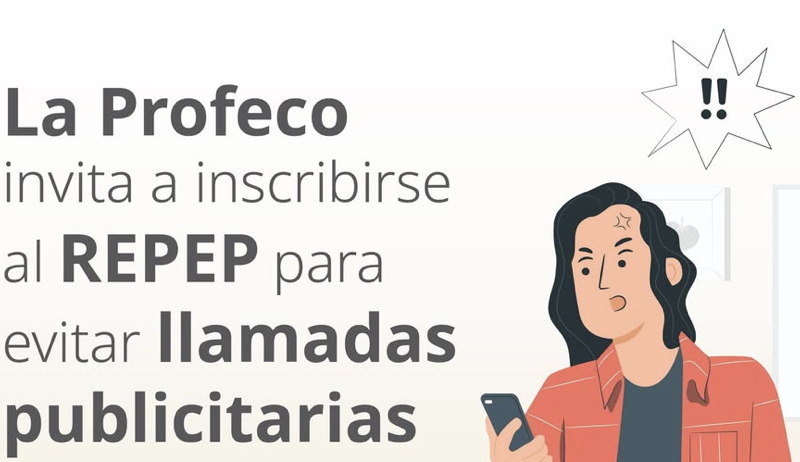
Blocking number by number on your cell phone is useless because they have hundreds of different lines. The solution is to go to the root: demand that the government prohibit companies from contacting you.
For this, there are two registries that function as a legal shield:
1. So that businesses don't bother you: The REPEP
The Public Registry to Avoid Advertising (REPEP) is administered by Profeco.
Who does it block? Telephone companies (Telcel, Movistar, AT&T), department stores (Liverpool, Coppel), and tourism services.
How do you sign up? Go to the official REPEP website or call the Profeco phone number. It is free.
Effectiveness: Once registered, companies have 30 days to update their databases and stop bothering you. If they call you after that, they get fined.
2. So that banks don't bother you: The REUS
The Public Registry of Users (REUS) is administered by Condusef.
Who does it block? Banks (BBVA, Santander, Citibanamex), insurance companies, and Afores.
How does it work? You register on the Condusef portal. You can block all banks or, if you prefer, leave only yours unblocked in case you need them to contact you.
Duration: The block lasts 2 years. Afterward, you have to renew it.
Note: The great exception (Collection)
Here is where many get confused. These registries block SALES AND ADVERTISING.
They do not block collection calls.
If you owe money to Coppel or the bank and have arrears, they have the legal right to call you to request payment (always with respect and during business hours). The REPEP and REUS do not save you from paying your debts, they save you from them wanting to sell you things you don't want.
What happens if they keep calling me after registering?

If 30 days have passed since your registration and "Santander" keeps calling you to offer insurance, you now have the upper hand.
Now you can file a Complaint for Unwanted Advertising:
Write down the number they called from and the time.
Ask for the name of the bank or company.
Go to the Profeco or Condusef page (as applicable) and report it.
The fines for companies are in the millions. Believe me, when the notification from the authority arrives, your number goes to a "real blacklist" internally so that no one dares to dial you again.
Steps to recover your peace today
Don't leave it for tomorrow. Do this now:
Go to Google and search "Registro REPEP Profeco" and "Registro REUS Condusef".
Have your cell phone number and email ready.
Sign up for both.
Wait 30 days.
It is your right to digital privacy. Use it and stop suffering every time the phone rings.